
In part, Eisenmann Druckguss is the sole supplier for a major automotive manufacturer. Therefore, production runs 24 hours a day, seven days a week on the machining centers. Problems within the supply chain would have catastrophic consequences. To further increase process reliability, optimize cycle times, prevent scrap, and detect wear prematurely, the company invested in monitoring systems. UT-Tm®-Basic by UTTec.
There are a total of five multi-spindle machining centers, which produce between 1.5 and 1.8 million transmission components per year. This means that the machining centers operate at 100% capacity. Maximum process reliability is therefore an absolute must at Eisenmann Druckguss. However, as recently as last year, laser-based tool measurement systems were still in use in Villingen-Schwenningen for tool breakage monitoring. A situation that was anything but satisfactory for Harry Steinhauer, authorized signatory and technical director at Eisenmann Druckguss: „First of all, numerous processes have changed here as well, and so the time required—up to five seconds for scanning the tools—was no longer acceptable, as this naturally had a negative impact on cycle times. Another problem was error slippage in the event of breakage or damage. That is, when the machine stops, you can manually clear it. But if it restarts in the wrong position without the affected part being immediately ejected, double machining occurs. With threads, that means scrap.“ To enable early and preventive detection, the company was therefore searching for a solution. A solution that would also include tool life monitoring, because although Eisenmann exclusively processes problem-free aluminum alloys, casting—due to issues like shrinkage cavities—can lead to increased tool wear. Given these requirements, it quickly became clear to those in charge that they wanted to invest in professional process monitoring. At the same time, they received a recommendation for UTTec’s monitoring systems. For Lars-Jan Szymanski, CEO at Eisenmann Druckguss, this recommendation was, in hindsight, absolutely spot-on: „We had clearly defined the requirements, but the problem was that we use both older and newer machining centers, and thus the control systems are different. These range from the Siemens 840d Powerline to the 840dsl Solution Line, including different generations of software.“ Despite these conditions, UTTec was able to offer and install a reliable monitoring system.
Problems very early on through transparency recognize
Work is now underway on the five multi-spindle machining centers using UTTec’s UT-Tm®-Basic monitoring systems. And one thing can already be said with confidence in Villingen-Schwenningen: the uncertainties in the processes have been resolved and are a thing of the past, and the number of „good parts“ has measurably increased. However, to optimize cycle times, the systems are not yet being used to their full potential on all machines. Uwe Schröter, Managing Director of UTTec, does not see this as a problem, though: „The systems were only recently installed, and Eisenmann does not yet have the necessary manpower. However, we have since resolved the issues with double processing, and cycle times have also been optimized on two machines. Since a different product is processed on each machine, we have to fine-tune each machine step by step. Regardless of this, we are also in online contact with Eisenmann Druckguss.“ Specifically, this means that the UT-Tm® Basic systems are equipped with a VNC server. UTTec connects via the Internet using the web software and the UT-Da® data analysis tool. The data is analyzed in Winnenden, and the solution is adjusted via remote maintenance. This has the advantage of allowing us to provide insights and support without time-consuming and costly travel. With UT-Da®, machine running times, reasons for downtime, non-productive times, etc., can be recorded in detail. This has allowed cycle times at the two machining centers in question to be measurably optimized. And soon, the recording of service life will also be addressed.
Finally, the question arises whether such professional process monitoring is worthwhile for such different machine and control generations. Lars-Jan Szymanski has a very clear „yes“ on this: "Of course, such an investment makes sense. Depending on the manufacturer, the machines have different operating times depending on maintenance, upkeep, and care. However, with the monitoring system, they run even longer, because avoiding breakage means extending their lifespan. It also reduces the risk of production downtime." However, it is also interesting in this context that the transparency of the systems allows problems to be identified in advance. For example, UTTec noticed at Eisenman Druckguss that the current values on one machine were too high. As a result, the speeds and feed rates were optimized, significantly reducing the vibrations on the spindle.
Eisenmann Druckguss Company in Focus
Eisenmann Druckguss GmbH was founded in 1933 and today employs 220 people at its plants in Villingen. The company's core competencies include the development, casting, and manufacturing of high-quality precision parts made of zinc and aluminum. Currently, over 80 million parts per year are produced with its own mold making, CNC machining, and component manufacturing. The customer base includes the automotive, aerospace, electronics, electrical engineering, medical technology, and toy industries.
By the way
Uwe Schröter: „The problem of differing generations in control systems, including software, cannot be the customer's problem. The providers of such systems must address this. It was indeed not easy, but we have succeeded in offering a solution over the decades.“
Interesting side notes
Eisenmann Druckguss has recently invested in further machining centers and also plans to integrate UTTec's UT-Tm®-Basic monitoring systems here.
In part, Eisenmann Druckguss is the sole supplier for a major automotive manufacturer. Therefore, production runs 24 hours a day, seven days a week on the machining centers. Problems within the supply chain would have catastrophic consequences. To further increase process reliability, optimize cycle times, prevent scrap, and detect wear prematurely, the company invested in monitoring systems. UT-Tm®-Basic by UTTec.
There are a total of five multi-spindle machining centers, which produce between 1.5 and 1.8 million transmission components per year. This means that the machining centers operate at 100% capacity. Maximum process reliability is therefore an absolute must at Eisenmann Druckguss. However, as recently as last year, laser-based tool measurement systems were still in use in Villingen-Schwenningen for tool breakage inspection. A situation that was anything but satisfactory for Harry Steinhauer, authorized signatory and technical director at Eisenmann Druckguss: „First of all, numerous processes have changed at our company as well, and so the time required—up to five seconds—to scan the tools was no longer acceptable, as this naturally had a negative impact on cycle times. Another problem was the risk of errors slipping through in the event of breakage or damage. That is to say,
“If the machine stops, it can be manually freed. However, if it restarts in the wrong position without the affected part being immediately ejected, double processing occurs. With threads, this means scrap.„ Therefore, a solution was sought for early and preventive detection. A solution that should also be supplemented with tool life monitoring, because although Eisenmann exclusively machines problem-free aluminum alloys, casting, inter alia due to porosity, can lead to higher tool wear. As a result of these requirements, it was clear to those responsible that they wanted to invest in professional process monitoring. At the same time, they received a recommendation for UTTec's monitoring systems. For Lars-Jan Szymanski, CEO at Eisenmann Druckguss, this recommendation was absolutely effective from today's perspective: “We had clearly defined the requirements, but the problem was that we have older and newer machining centers in use, and therefore the controls are also different. This ranges from Siemens 840d Powerline to 840dsl Solution Line, including different software generations." Despite these conditions, UTTec was able to offer and install reliable monitoring.
Problems very early on through transparency recognize
Work is now underway on the five multi-spindle machining centers using UTTec’s UT-Tm®-Basic monitoring systems. And one thing can already be said with confidence in Villingen-Schwenningen: the uncertainties in the processes have been resolved and are a thing of the past, and the number of „good parts“ has measurably increased. However, to optimize cycle times, the systems are not yet being used to their full potential on all machines. Uwe Schröter, Managing Director of UTTec, does not see this as a problem, though: „The systems were only recently installed, and Eisenmann does not yet have the necessary manpower. However, we have since resolved the issues with double processing, and cycle times have also been optimized on two machines. Since a different product is processed on each machine, we have to fine-tune each machine step by step. Regardless of this, we are also in online contact with Eisenmann Druckguss.“ Specifically, this means that the UT-Tm® Basic systems are equipped with a VNC server. UTTec connects via the Internet using the web software and the UT-Da® data analysis tool. The data is analyzed in Winnenden, and the solution is adjusted via remote maintenance. This has the advantage of allowing us to provide insights and support without time-consuming and costly travel. With UT-Da®, machine running times, reasons for downtime, non-productive times, etc., can be recorded in detail. This has allowed cycle times at the two machining centers in question to be measurably optimized. And soon, the recording of service life will also be addressed.
Finally, the question arises whether such professional process monitoring is worthwhile for such different machine and control generations. Lars-Jan Szymanski has a very clear „yes“ on this: "Of course, such an investment makes sense. Depending on the manufacturer, the machines have different operating times depending on maintenance, upkeep, and care. However, with the monitoring system, they run even longer, because avoiding breakage means extending their lifespan. It also reduces the risk of production downtime." However, it is also interesting in this context that the transparency of the systems allows problems to be identified in advance. For example, UTTec noticed at Eisenman Druckguss that the current values on one machine were too high. As a result, the speeds and feed rates were optimized, significantly reducing the vibrations on the spindle.
Eisenmann Druckguss Company in Focus
Eisenmann Druckguss GmbH was founded in 1933 and today employs 220 people at its plants in Villingen. The company's core competencies include the development, casting, and manufacturing of high-quality precision parts made of zinc and aluminum. Currently, over 80 million parts per year are produced with its own mold making, CNC machining, and component manufacturing. The customer base includes the automotive, aerospace, electronics, electrical engineering, medical technology, and toy industries.
By the way
Uwe Schröter: „The problem of differing generations in control systems, including software, cannot be the customer's problem. The providers of such systems must address this. It was indeed not easy, but we have succeeded in offering a solution over the decades.“
Interesting side notes
Eisenmann Druckguss has recently invested in further machining centers and also plans to integrate UTTec's UT-Tm®-Basic monitoring systems here.
Contact
Eisenmann Die Casting LLC
Mr. Lars-Jan Szymanski
78050 Villingen-Schwenningen
Tel. +49 (0)7721 – 2007-0
www.eisenmann-druckguss.de/
UTTec GmbH & Co KG
D-71364 Winnenden
Tel. +49 (0) 7195 – 9791-100
www.uttec.de
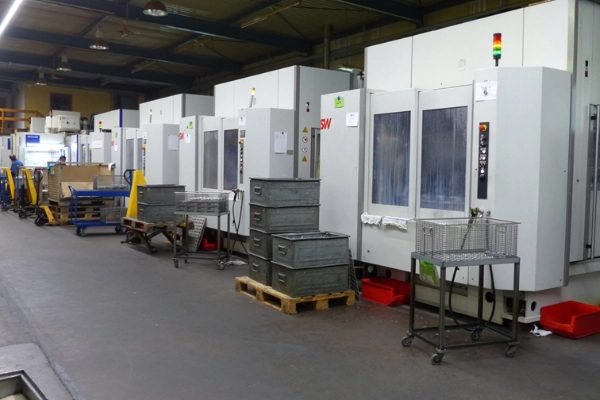
A total of five multi-spindle machining centers of the same make but with different control generations were integrated with the UT-Tm®-Basic monitoring systems.
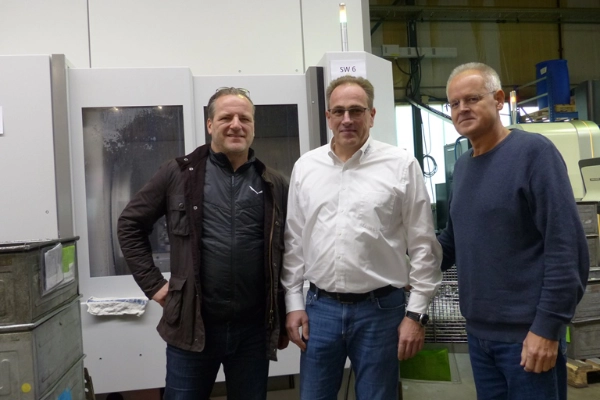
Lars-Jan Szymanski, Uwe Schröter, and Harry Steinhauer (from left to right): „The uncertainties in the processes have been eliminated, the number of good parts has definitely increased measurably, and optimizing cycle times on all machines is only a matter of time.“
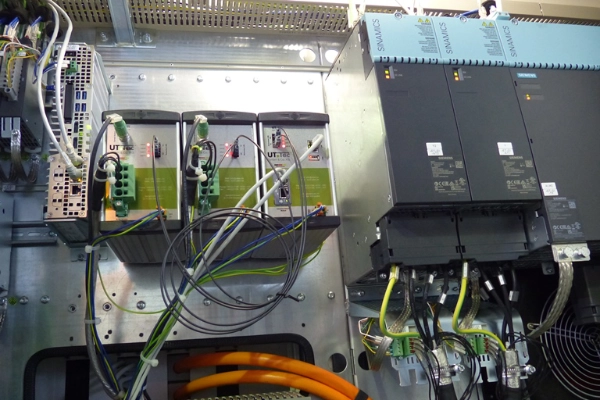
Process safety increased, cycle times optimized, and error slippage avoided with UT-Tm®-Basic monitoring systems.
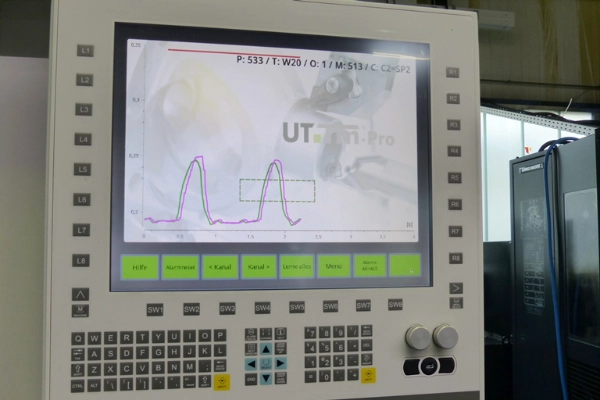
In Villingen, it was quickly realized that the work that was done was highly professional.

For these and similar gearbox components, lot sizes currently range between 1.5 and 1.8 million units per year.
written with the kind support of


 English
  Deutsch
  Polski
  Italiano
  Français
  简体中文
简体中文